


Pros / Reasons to Buy
- Very rugged yet soft and flexible to wear
- Minimal style with classic feel
Cons / Reasons to Avoid
- Could do with a little more ankle support
- Takes a few wears to break in
See the Danner Panorama Mid’s in motion:
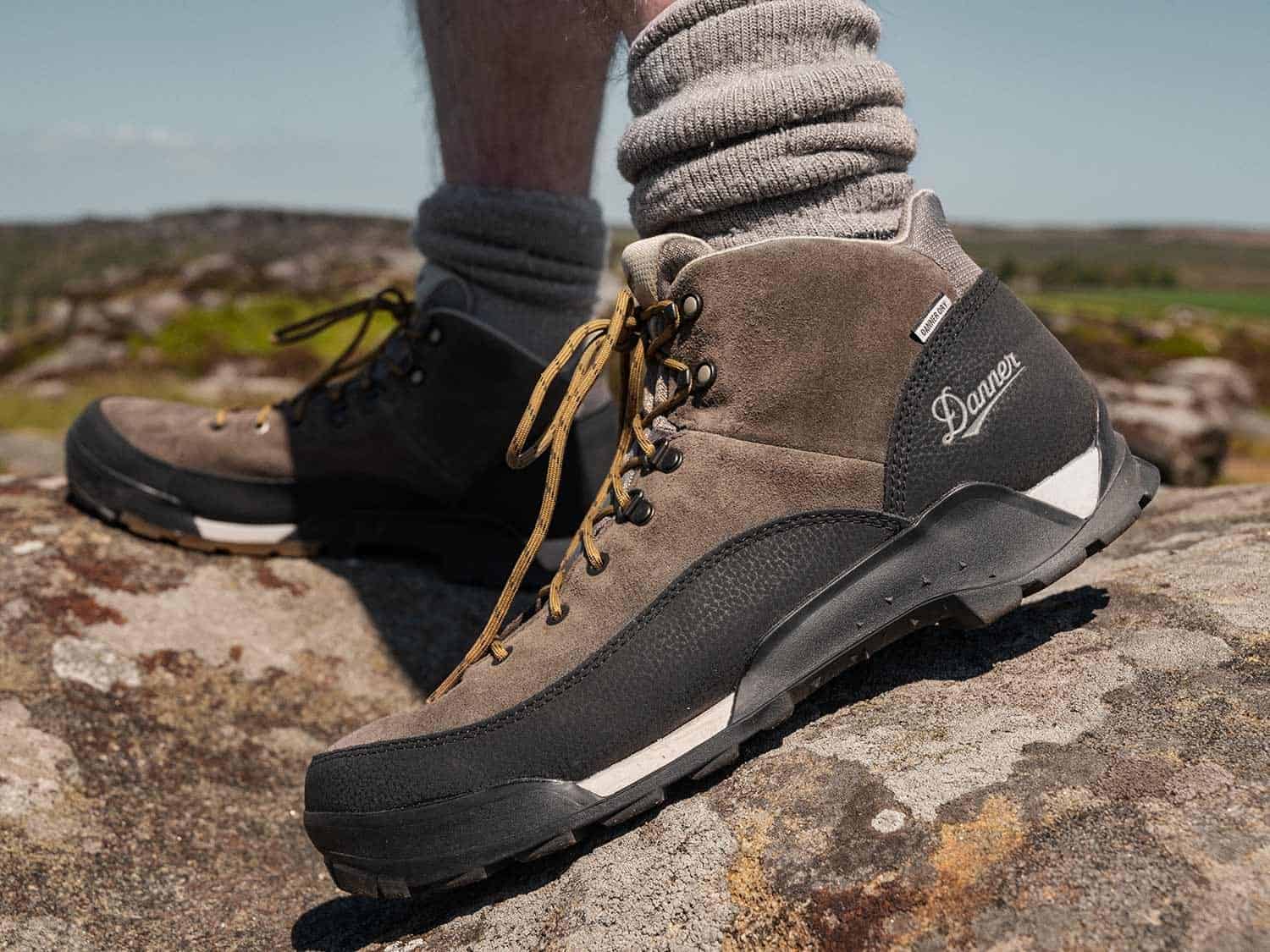
We were incredibly impressed by the Danner Panorama Mid’s and – so much so, they came out as our top pick for best waterproof hiking boots. Here’s why – they were exceptionally comfortable for one. What we also loved was their versatility, whilst they are certainly not a rigid B rated boot, these Danner Panorama Mid’s are really well suited for demanding alpine trails, hill hiking and general walking and hiking. For many hikers, these could be the only water resistant walking shoes you need and if you’re also familiar with the Danner Mountain Light 2 boots, you’ll like these. Weighing in at 1048g/2lb 5oz per pair, they are not the lightest waterproof hiking shoes in our reviews, but considering their robust build, they make up for it with a footwear option you’ll be able to trust. These Danner boots have their own in-house produced sole made of rubber which performed extremely well on slippery surfaces and wet rocks as well as allowing you to feel where you are.
Whilst these boots don’t outrightly look from first glance like they are the most breathable, they have a Gore-Tex membrane that helps with breathability and unless you go hiking in extremely hot conditions, you’ll have no complaints about the Danner Panorama Mid’s. They’re offered in two widths – standard and wide and are also available in sizes US 7/UK6.5/EU 40 to US15/UK14.5/EU50.6, and we were really happy to see an option available for those with larger feet. They use a mix of suede and synthetic materials keeping them durable. They could very well last you for a long time if looked after well! Read our full review of the Danner Panorama Mid Hiking Boots here.



Pros / Reasons to Buy
- Striking design which feels very stylish
- Love that they use recycled materials
Cons / Reasons to Avoid
- The sole can look a bit worn over time
- They are on the pricey side
See the Adidas Terrex Free Hiker 2’s in motion:
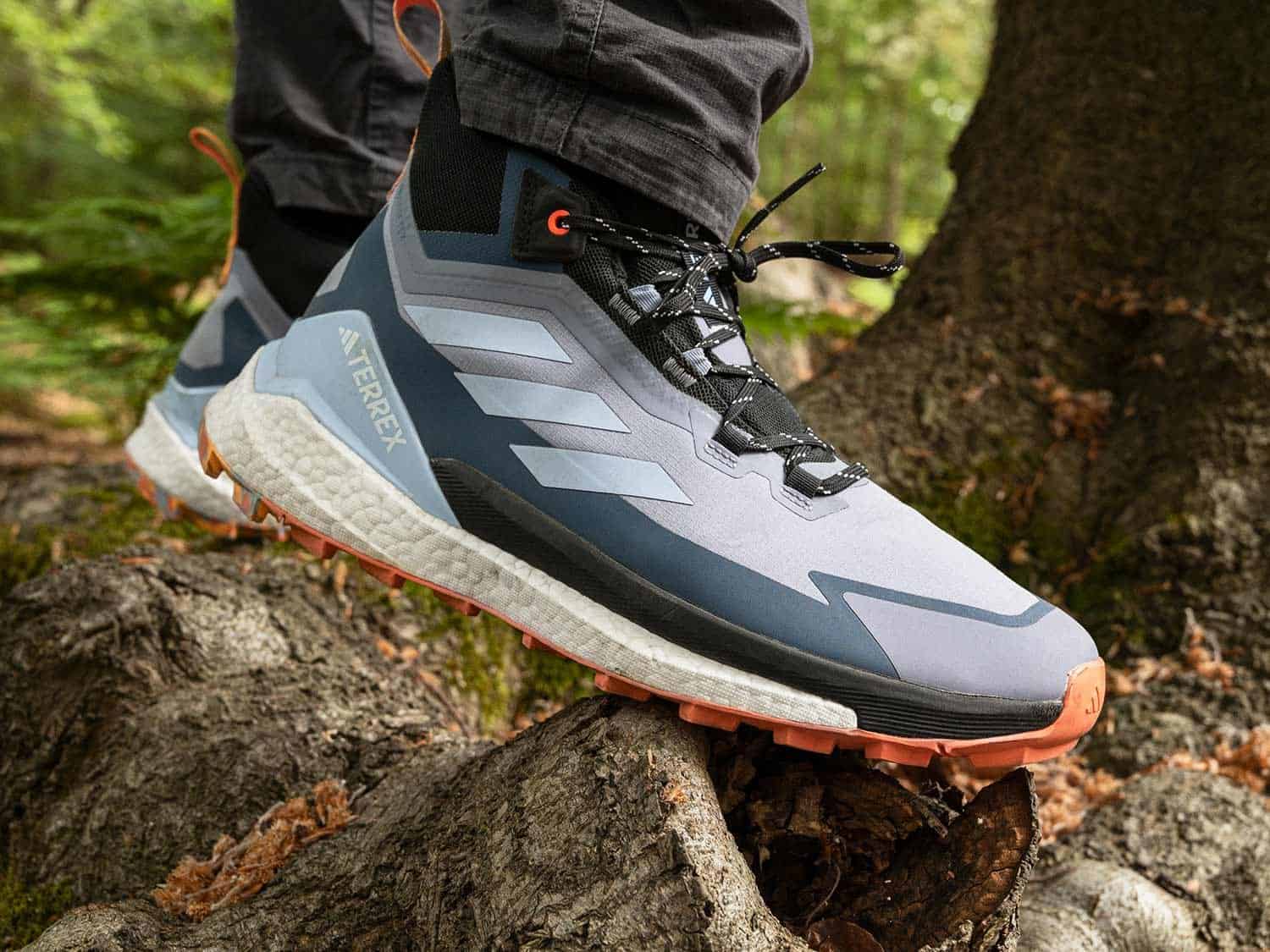
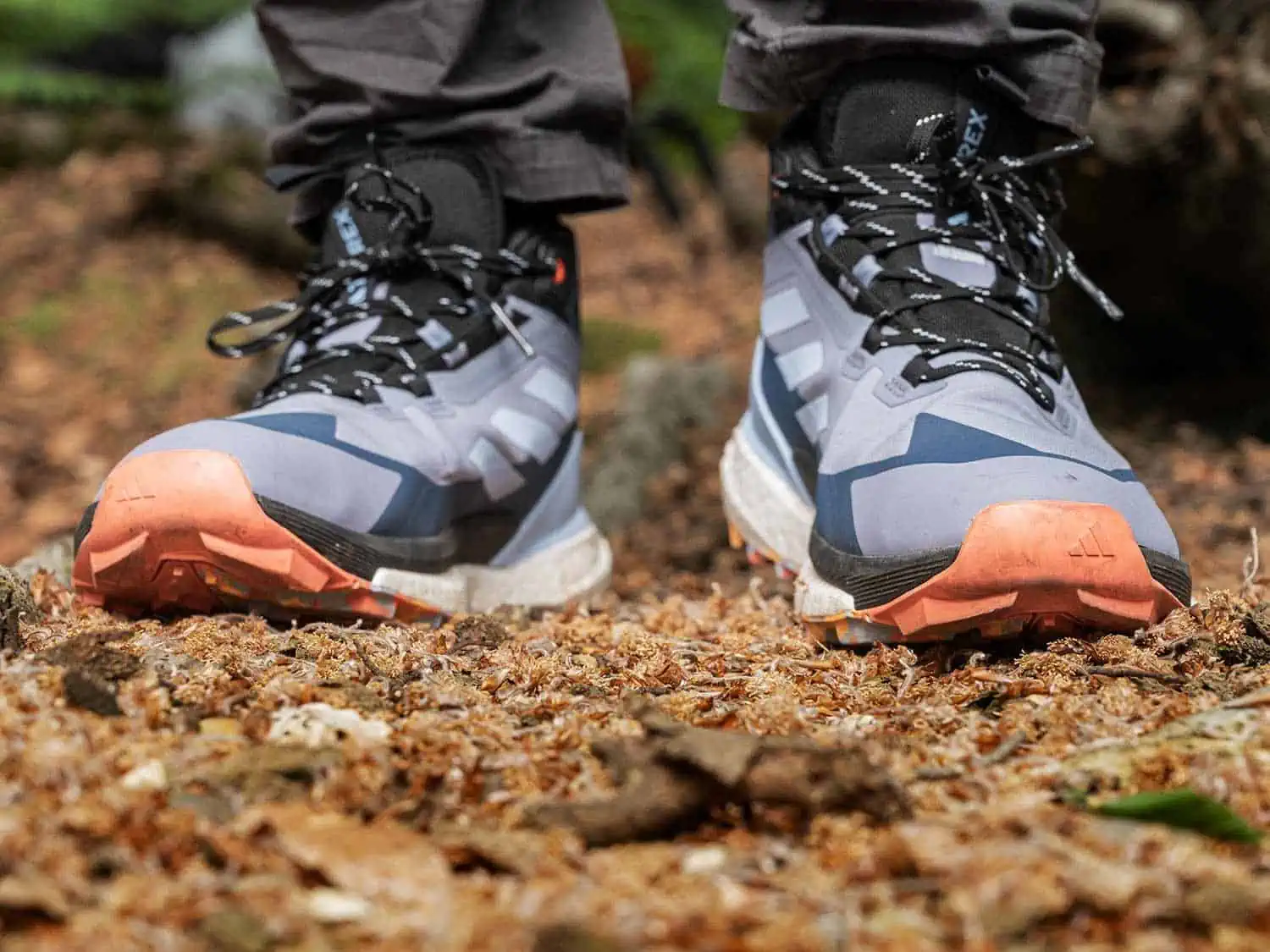
If you’re looking for a great pair of lightweight hiking shoes that work well all round, then you may well have found it with the Adidas Terrex Free Hiker 2’s. Adidas shoes have of course been on the market for longer than most of us will remember, but their Terrex range, aimed at technical outdoors pursuits has been making waves since 2011 when it launched its first climbing focused range. Since then, it has expanded, and their products are surprisingly great. If you don’t want to make any compromises when it comes to style whilst out on the trail, the Terrex Free Hiker 2 will not disappoint, and will look just as good in the dirt as they will in town later the same day.
However, there’s more to these comfortable hiking shoes than their looks alone and that’s why we gave them our recommended award as some of the best waterproof hiking shoes for men. Firstly, they’re incredibly durable. Waterproof hiking shoes have come a long way and these present a great option. They are Gore-Tex so waterproof and breathable, and you’ll notice that if you look closely, they have a tight square rip-stop pattern which helps tremendously will durability. They aren’t going to offer you a great amount of ankle support due to the snug fitting collar, but that level of adjustability can also be great on the trail. Once more, they’re also available in a large range of sizes that you don’t always see from outdoors brands – from US 6/UK 5.5/EU 38.6 to US 15/UK 14.5/EU 50.6 and suitable for normal to slightly wide feet. These waterproof shoes are pretty much instantly comfortable, and it won’t be long before you’re taking them out on long hikes with no worries. Read our full review of the Adidas Terrex Free Hiker 2 here.


Pros / Reasons to Buy
- For the product, these come at a bargain price!
- Incredibly well made and durable
Cons / Reasons to Avoid
- Limited in terms of color choice
- On the heavier side of our reviews
See the Regatta Vendeavour Pro’s in motion:
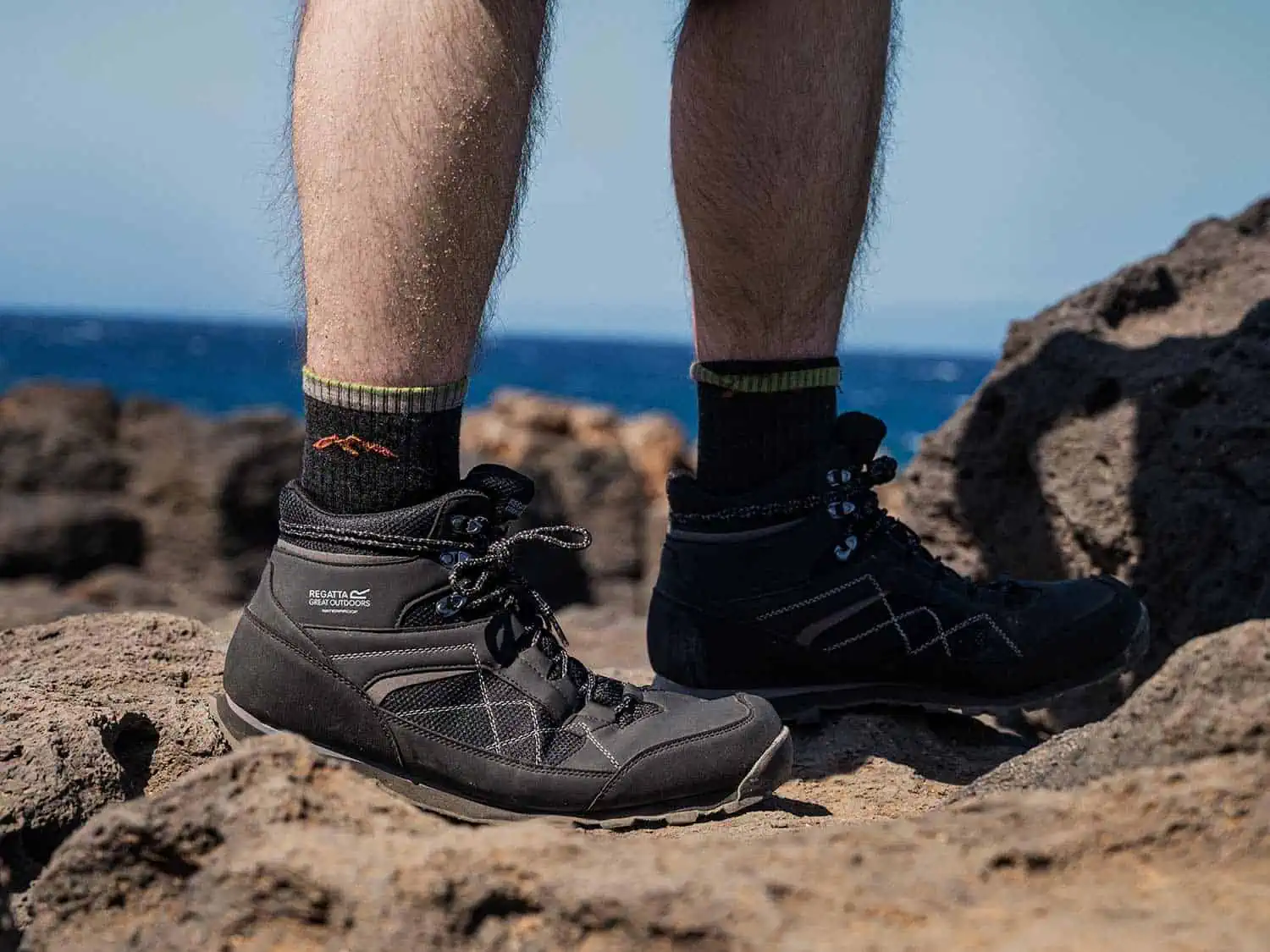
Why have the Regatta Vendeavour Pro’s got our recommended award? For the price point they come in at, they are one of the most affordable shoes in our round up, but they certainly don’t feel entry level – anything but in fact. Inexpensive hiking shoes that are actually well performing are hard to come by, but we’ve been incredibly impressed by the Regatta Vendeavour Pro’s performance out on the trail for their comfort, durability and waterproofing. It may not be the most stylish model, but we firmly believe they are some of the best men’s waterproof hiking shoes on the market right now. Whilst they did have a bedding in period, this was minimal and after a few shorter walks, they were ready for longer, more demanding trails very quickly with no complaints.
The Regatta Vendeavour Pro’s have large mesh sections on the sides which aids their breathability, but they get the balance between insulation and breathability right here. Coming in a mid design, they also offer a good level of ankle support which will be more than adequate for a lot of hikers, even into tackling more tricky and difficult terrain. They make use of Regatta’s own ‘Isotex’ membrane; their own version of Gore-Tex ,which likely allows them to keep the price of these waterproof shoes down. They’re entirely synthetic, but don’t let this fool you – they’re extremely durable and we would confidently say that if you look after these boots, you’ll be hiking many miles happily in them! Read our full review of the Regatta Vendeavour Pro here.

Pros / Reasons to Buy
- Lightweight
- Extremely Comfortable
Cons / Reasons to Avoid
- Lacking in ankle support
- On the pricey side
See the Salomon Cross Hike 2 Mid Gore-Tex in motion:
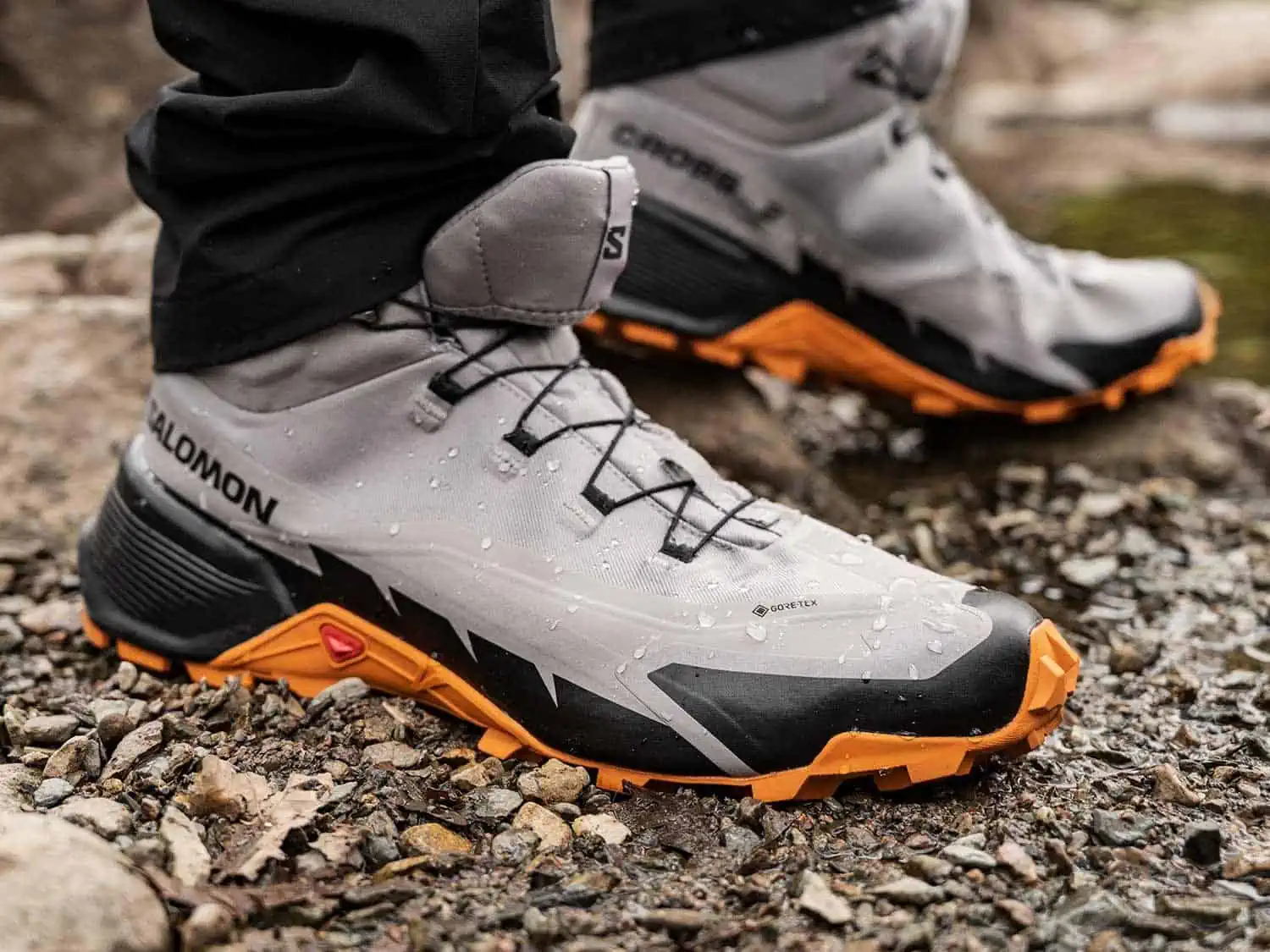
The Salomon Cross Hike 2 Mid Gore-Tex are some of the best Gore-Tex hiking shoes on the market. If you’ve spent any amount of time in the outdoors, you’ll know that Salomon are well respected for their hiking shoes and boots, and these do not sit any differently, and they certainly don’t disappoint. In fact, the Cross Hike 2 are one of the highest tech products in our round up. They make use of fully synthetic materials and top of the line technology to help with both weight and breathability, making an incredibly versatile, breathable, and waterproof hiking shoe. Coming in at 826g/1lb 13 oz a pair, this is impressive and will make a big difference to your speed and fatigue on the trail.
Their mid to deep thread on the rubber sole has an excellent grip on slippery rocks and more technical terrain also. What’s more, the Salomon Cross Hike 2’s were near trail ready straight out of the box – of course, we’d always recommend breaking them in through a series of shorter trails, but you’ll be ready to go in these in no time. We were amazed at just how waterproof these mid’s were too – after extensive testing, they showed no signs of damage and we’re confident that these Gore-Tex hiking shoes will last you a very long time. Read our full review of the Salomon Cross Hike 2 Mid Gore-Tex waterproof shoes here.





Pros / Reasons to Buy
- Very durable hiking shoes
- Extremely comfortable
Cons / Reasons to Avoid
- Pricey
- Run cool in wetter conditions
See the Danner Women’s Trail 2650 in motion:
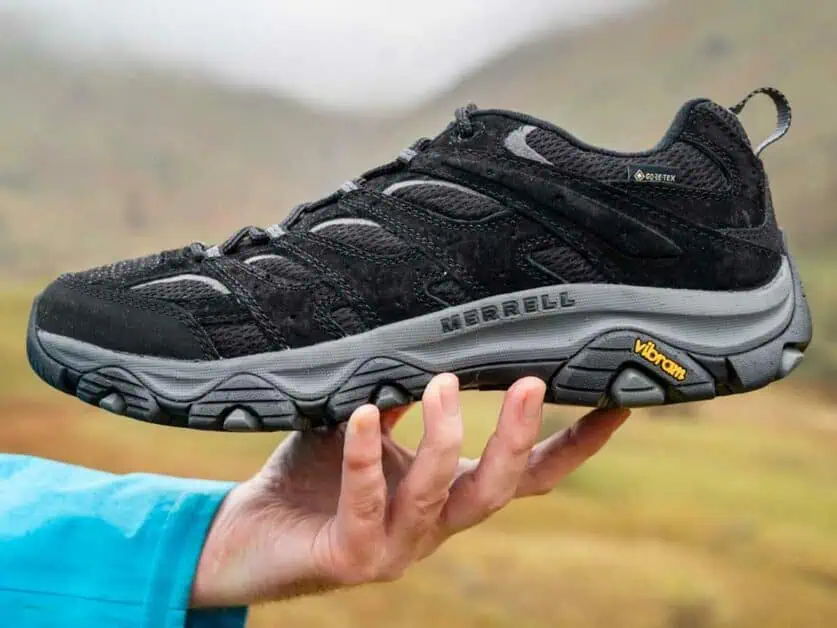
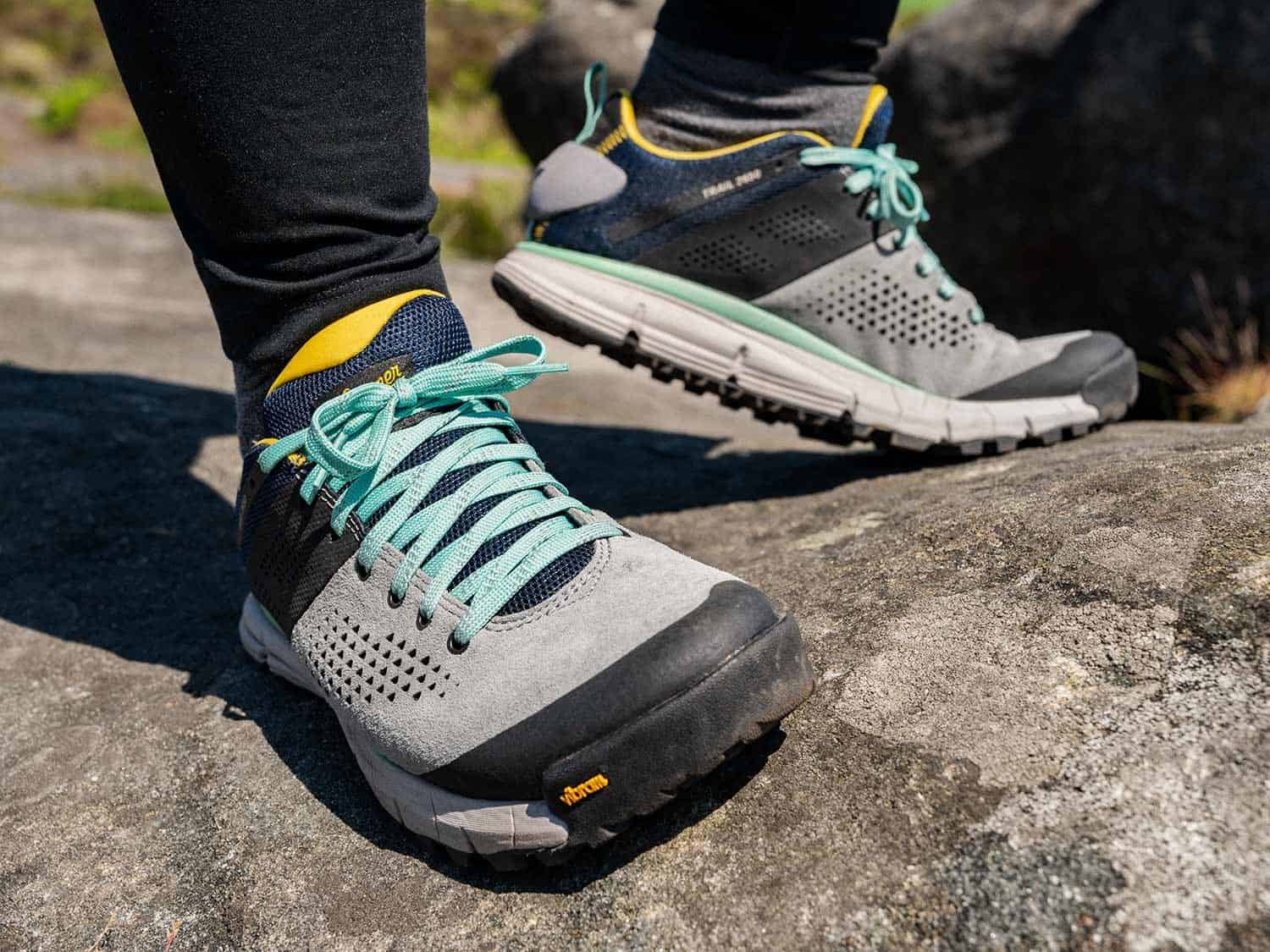
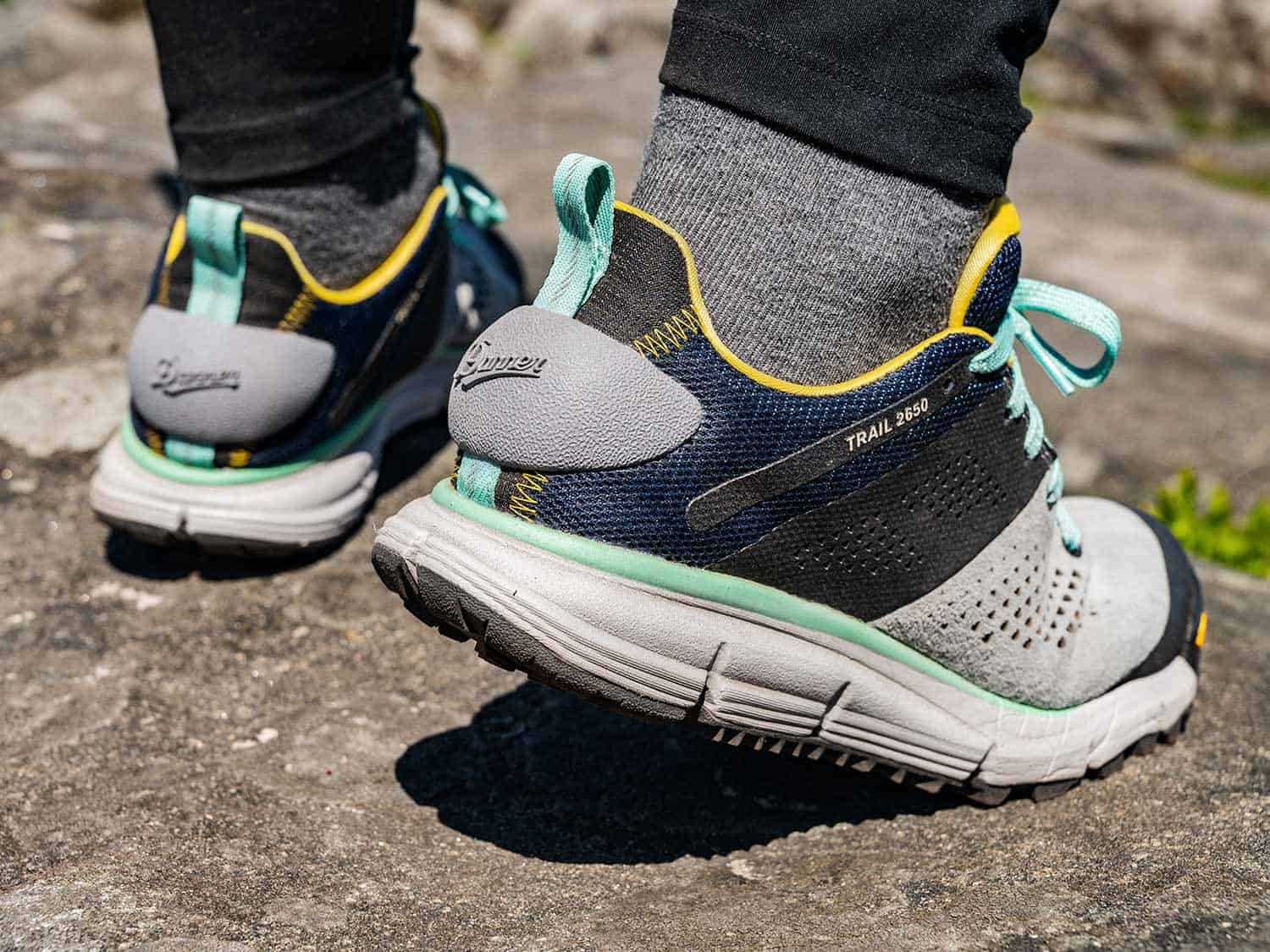
These 2650 shoes from Danner have won our top pick award quite simply because they are one of the most comfortable waterproof walking shoes we’ve ever tested. We do not say that lightly. What’s more, these hiking sneakers are as good on the trail as they are in town in the evening – they’re stylish and striking. If you’ve read any reviews on Danner shoes, you’ll see that the Mountain Light comes up an awful lot, but the brand has a lot more to offer than just these (though these are also great) and the 2650’s are a great example of this. They’re the perfect shoe for general hiking, light mountaineering and are surprisingly well water proofed. Their comfort comes in part from their Vibram outsole with a medium to deep thread pattern that offers excellent grip and traction even on slippery, rocky surfaces. We found the one width offering was perfect – even for our reviewer who has slightly wider feet as the shoes have a slightly widened toe post that helps here with comfort. They’re offered in a range of sizes from US 5/UK 3.5/EU 36 to US 11/UK 9.5/ EU 44 which isn’t the biggest, so if you do find yourself needing a slightly larger shoe, they are offered as a men’s version too (there really isn’t any difference).
The Danner Trail 2650 water resistant shoes use a mixture of leather suede and synthetic materials; however the suede areas are relatively small and put to use on the front of the shoe where it’s best placed. The rest is entirely synthetic with open mesh or rubberised mesh. The moulded flourish on the heel of the shoe provides extra rigidity against impact here. We have racked up hundreds of miles on the trail in these shoes and they show no signs of letting us down – we’ve been extremely impressed and we’re confident to say, you will be too – they’re some of the best low cut hiking shoes on the market. Read our full review of the Danner Women’s Trail 2650 here.

Pros / Reasons to Buy
- Very comfortable and some of the best waterproof trail shoes out there
- A large number of options in the ‘Hedgehog’ range
Cons / Reasons to Avoid
- Not as durable in some areas as others in our round up
- Pricey
See The North Face Hedgehog Fastpack in motion:
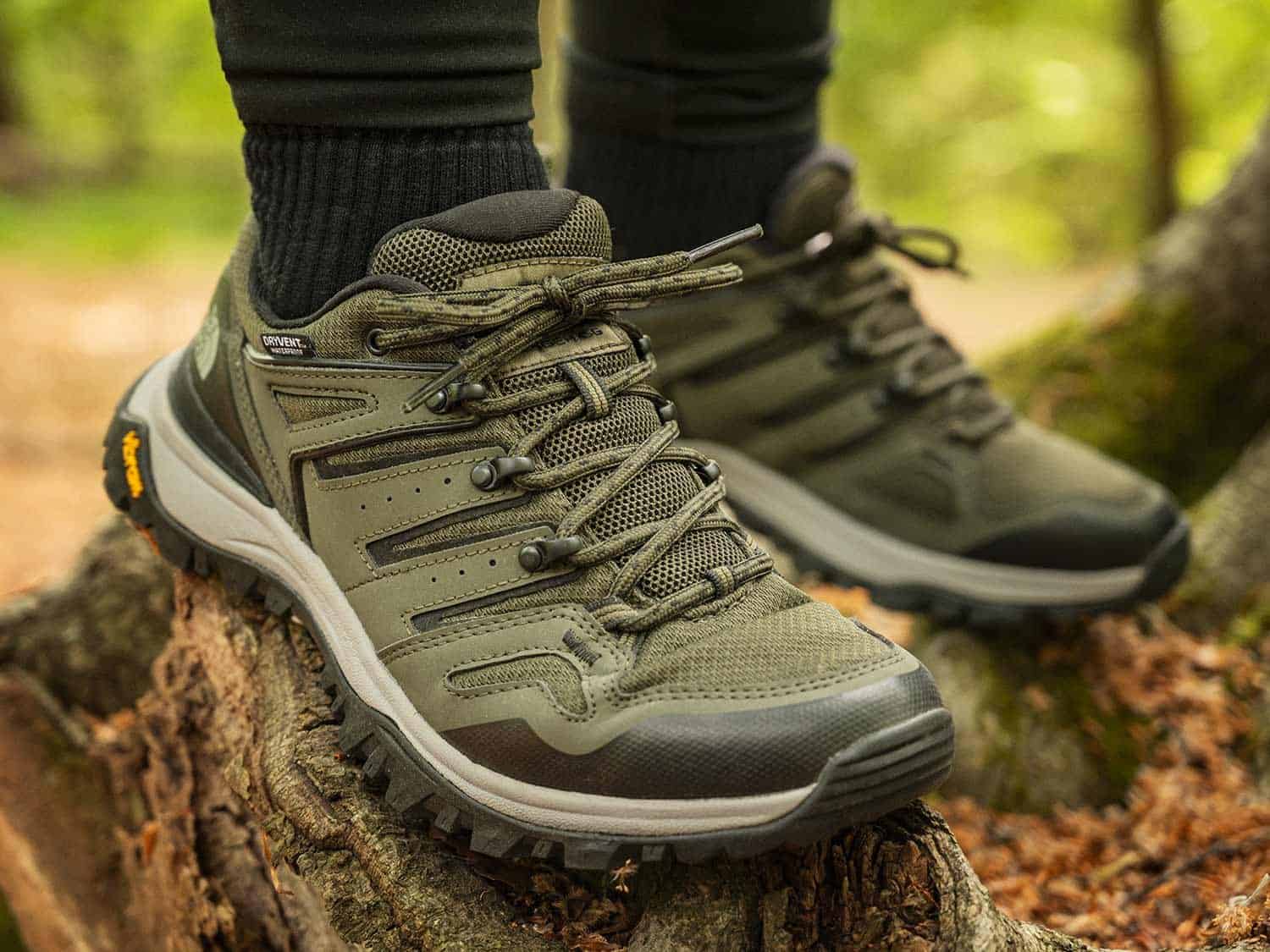
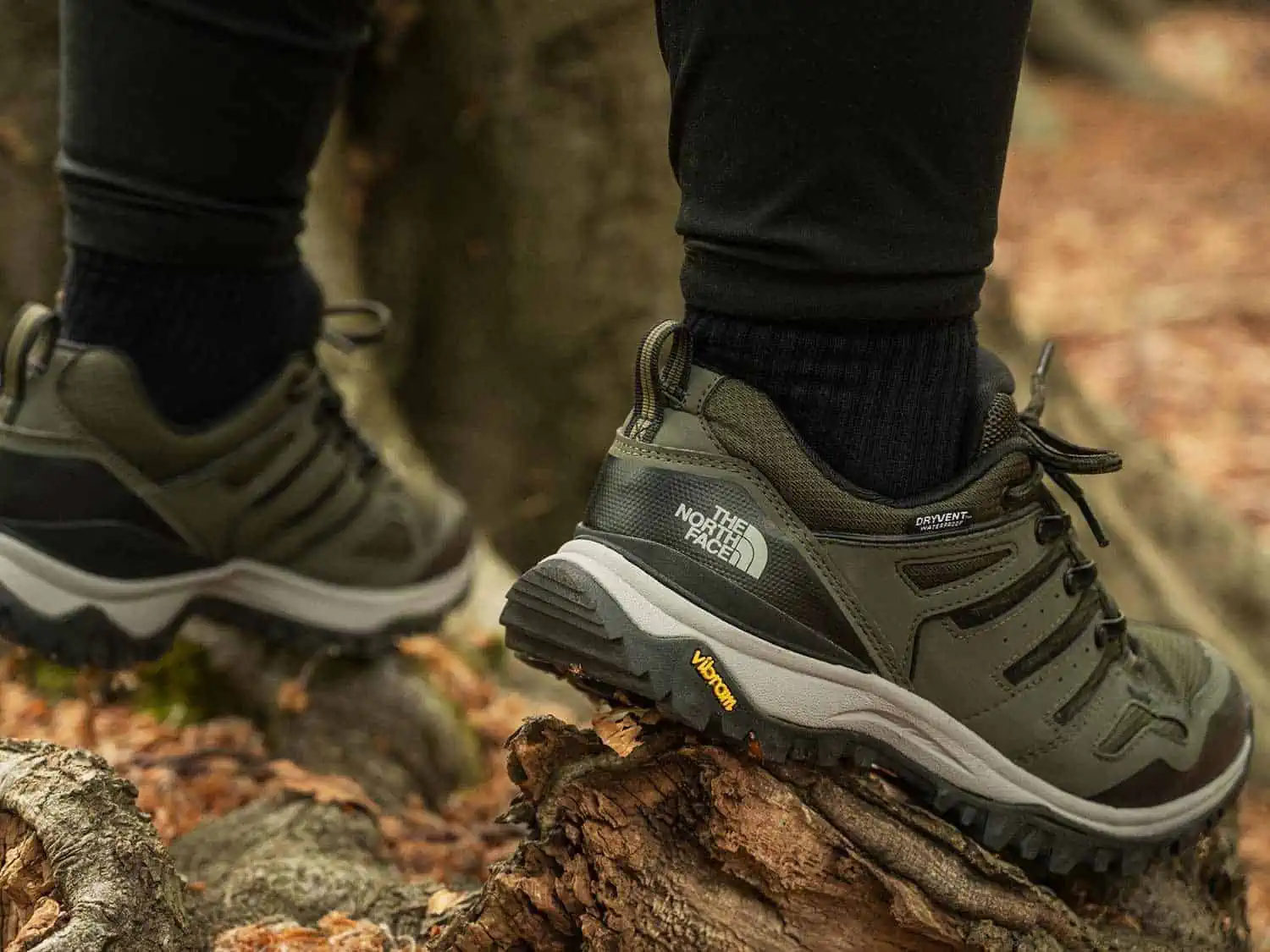
When it comes to reliable waterproof shoes, the Hedgehog range from The North Face have you covered – our reviewers have personally been using these shoes for years and have never not been impressed. One of the main reasons they get our recommended award here is because of their combination of reliability, comfort and water resistance. These The North Face Hedgehog Fastpacks are ideal for exactly that – fastpacking and backpacking and they’re some of the best waterproof sneakers you can get on the market. Whilst they’re not going to hold up to full on alpine conditions or wintery conditions like more traditional hiking boots will, they make use of a Vibram sole with medium to deep thread pattern. This is extremely ‘grippy’ and performs well on slippery rocks and uneven surfaces.
Their breathability is second to none and this helps with their flexibility too – we’ve been just as happy wearing these out in the desert as we have more wet and windy conditions. The North Face’s use of synthetic materials allows them to create a fully waterproof shoe using their own waterproof membrane (in this instance, Dryvent). They’re lightweight at 663g/1lb 7oz a pair and you’ll really notice that on the trail. You’ll also be happy at just how quickly they break-in (almost not needed) and will feel comfortable in these from pretty much the get go. Read our full review of The North Face Hedgehog Fastpack here.

Pros / Reasons to Buy
- Beautiful design with striking colorways
- Some recycled materials used
Cons / Reasons to Avoid
- The way they look may not be to everyone’s taste
- Slightly narrow
See the Adidas Terrex AX4 Gore-Tex in motion:
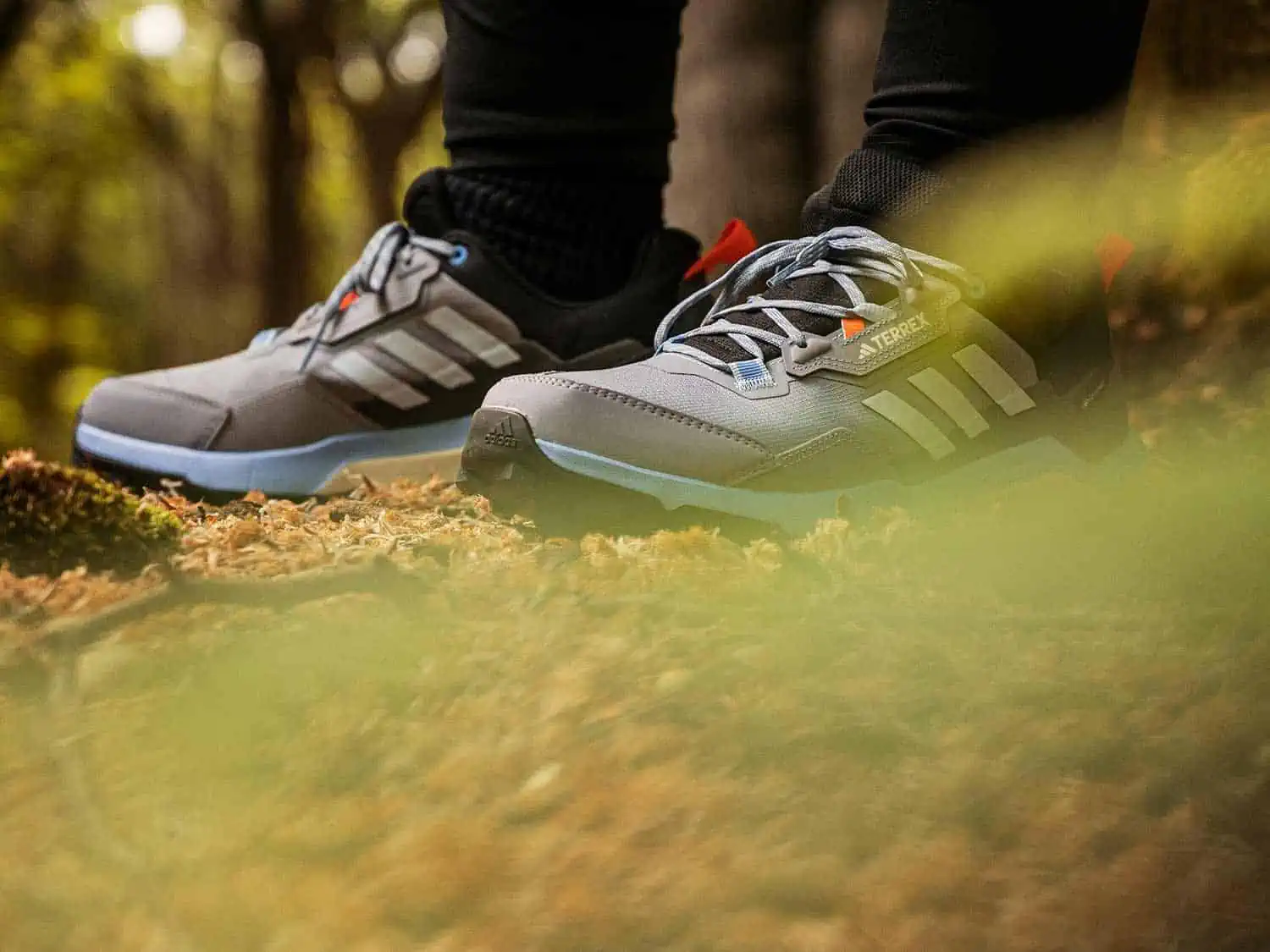
As with our review of the Adidas Terrex Free Hiker 2 above, these AX4 Gore-Tex sit within the same range of outdoors focused products from Adidas. Like the Free Hiker 2’s, these shoes do not disappoint and make a great option for a lightweight hiking shoe. In fact, their robust waterproof membrane alongside Adidas’ own technologies put them in the running as some of the best Gore-Tex trail running shoes out there. Their stunning design has them sit comfortably on the trail whilst also being suitable for general use too – making them a versatile shoe and meaning you need to buy less. Adidas make use of a Continental sole on all of their Terrex shoes and this rubberised grip provide excellent traction on wet and slippery surfaces. Whilst on first look these hiking shoes don’t seem the most breathable, the finely woven rip-stop material on the upper not only helps with durability, but with breathability too. Even though they’re not the most ventilated in our round up, you won’t have any problems – we’ve tried them out in very hot conditions and they perform very well.
The one thing to be weary of is their slightly narrow fit, and the shape of the toe does contribute to this even more. Absolutely fine if you have slightly narrow or ‘normal’ feet, but if you’re feet run a little wide, you may find it best to try the AX4’s on before you buy. Read or full review of the Adidas Terrex AX4 Gore-Tex hiking shoes here.

Pros / Reasons to Buy
- Very stylish and understated
- Supportive and surprisingly rigid
Cons / Reasons to Avoid
- Pricey
- Run a little narrow
See the ON Cloudrock 2 in motion:
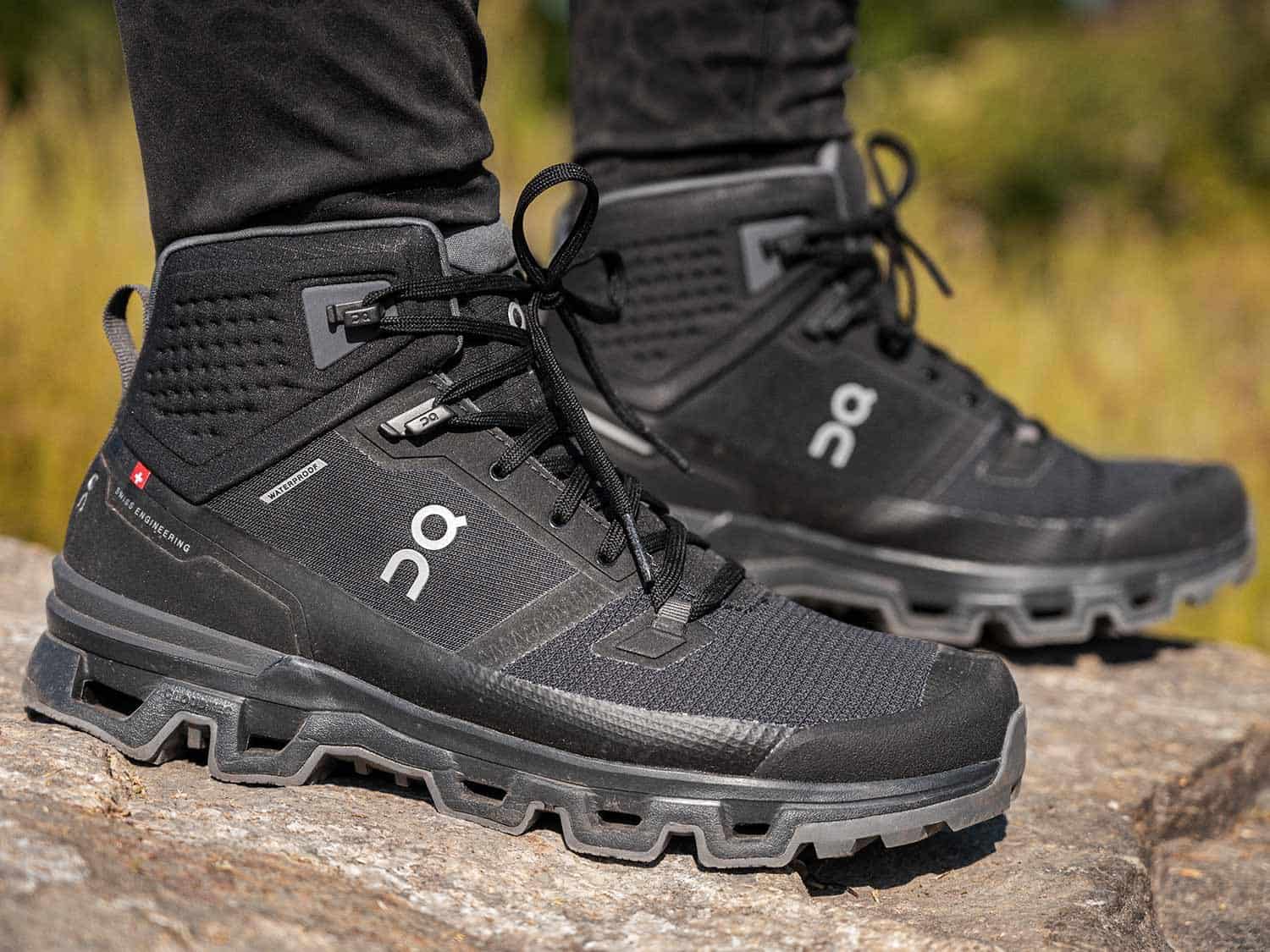
These On waterproof shoes are making some serious waves in the outdoor footwear scene and rightly so – they’re incredibly robust and well made for purpose not to mention extremely comfortable. On are a relative newcomer to the market and have made a name for themselves in producing feature led footwear for years (with a big focus in trail running). What we loved about the Cloudrock 2’s was the balance between their understated good looks and their technical design, making them some of the best waterproof shoes for walking you’ll find. Their unique ‘cell’ style honeycomb cutaway sole gives an aggressive thread pattern – more than any other shoe in our line up, and this gives you a very secure shoe in just about any terrain. The mesh panels on the upper section of these waterproof shoes are backed with a membrane which will keep your feet dry, no questions asked. They perform extremely well in both cold and warmer temperatures with no comfort concerns regarding both insulation and breathability. Whilst these do run a little narrow and have a maximum size of US 11/UK 9/EU 43, they are offered in a men’s variant which offers a larger size range and is virtually indistinguishable from the women’s version. Read our full review of the On Cloudrock 2 here.

Pros / Reasons to Buy
- Very sturdy
- Excellent ankle support – in fact some of the best ankle support hiking boots in our round up
Cons / Reasons to Avoid
- Longer break-in period
- Rigid design may not be to everyone’s taste
See the Salomon Quest 4 Gore-Tex in motion:
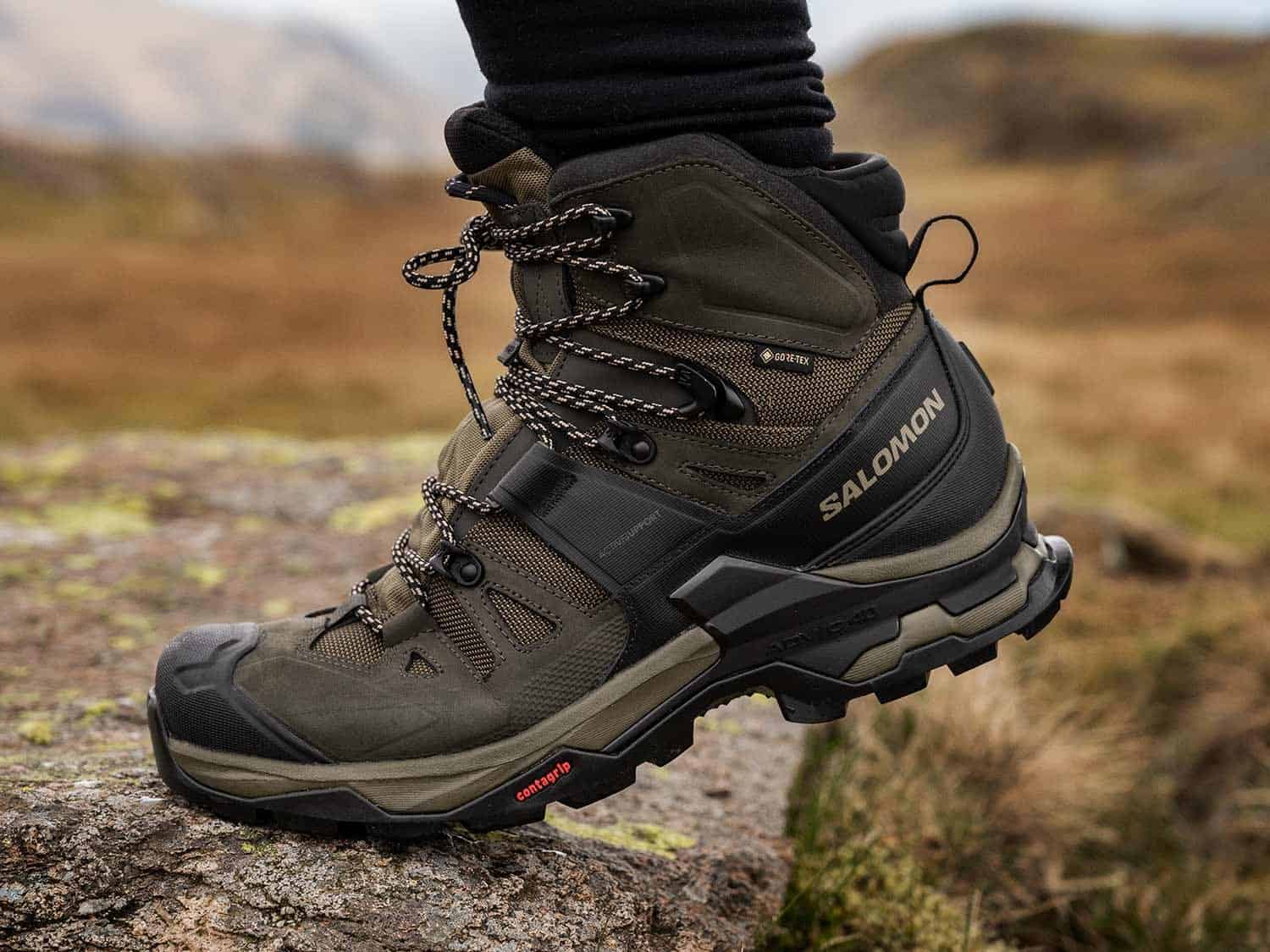
This offering from Salomon is certainly up there with the more substantial hiking boot, but if you find yourself in muddier and wetter conditions, you may well find that these are the only hiking boots you need. We’ve been very impressed with the offering here from the Quest 4 Gore-Tex and whilst they aren’t rated as B1, they feel like they could be. Whilst they may not look it, they’re incredibly breathable with large mesh sections that make use of a Gore-Tex membrane for their waterproofing. Whilst there are more breathable options on the market for hiking boots, when you consider what these are intended for, the breathability they offer is actually excellent.
They’re certainly not low cut hiking boots, but they offer fantastic ankle support and stand up very well to demanding terrain. However, like with most rigid hiking boots, they do take some getting used to and have a longer break in period than some of the other shoes and boots in our line-up. They’re a fantastic option if you find you have wider feet too – our reviewer does and found them very comfortable once they were broken in. They are at the heavier end of the scale, coming in at 1070g/2lb 6oz for a pair, but when you consider their construction, that is phenomenally lightweight, and if you compare them to some of their competitors aimed at the same function, you’ll find these come in very well in this category. Read our full review of the Salomon Quest 4 Gore-Tex here.

Pros / Reasons to Buy
- Extreme rigidity with great support
- Very comfortable and light
Cons / Reasons to Avoid
- Specialized (more suitable for mountaineering)
- Pricey
See the Scarpa Ribelle Lite HD in motion:
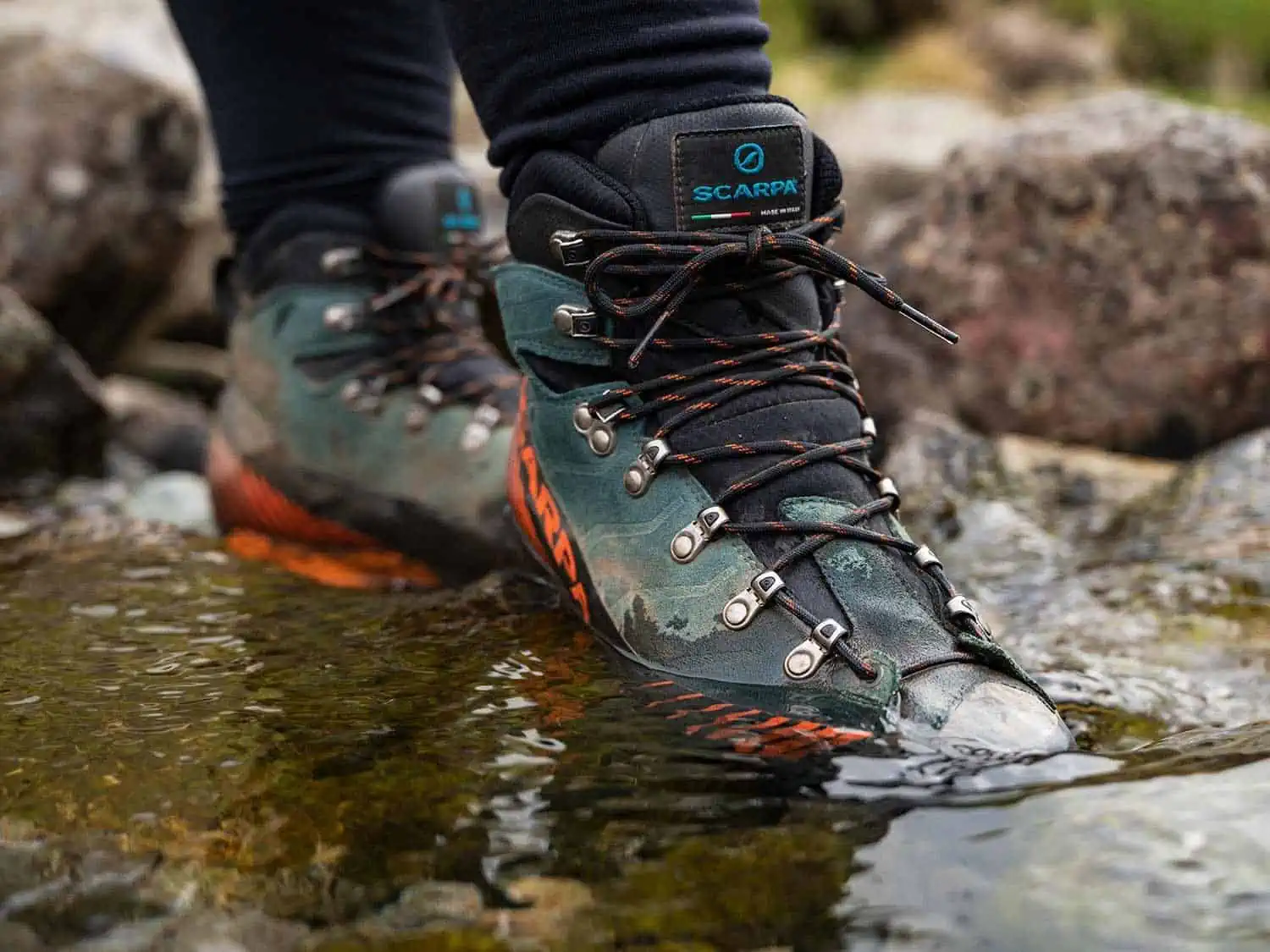
These waterproof boots from Scarpa are possibly the most specialized in our roundup, but they present a fantastic option for those who need a boot for extreme mountaineering, high altitude expeditions and general alpinism. Whilst we have tested these boots out in generalized hiking, it would be fair to say they are going to be overkill for a gentle hike. Where they come into their own is in situations where insulation, waterproofing, ankle support and lightness are important. They’re also compatible with crampons as well as semi-automatic crampons. These Vibram hiking shoes provide excellent traction on all surfaces except for conditions where you’d expect to use crampons or other such devices. Whilst these boots aren’t outwardly breathable, they are more intended to be insulting and waterproof – two areas where these boots make up for the former in bounds. They run at an average fit, meaning they wear exceptionally well for people with normal to wider feet, but unless your feet are exceptionally narrow, you will have no problem, especially with a thicker mountaineering sock.
These fully synthetic boots are exceptionally durable and are built to withstand extreme conditions and take them in their stride. We’ve been nothing but impressed with this offering from Scarpa, and if you’re in the need of a waterproof hiking boot that is going to last you a long time, you would not go wrong with these. Available in men’s version too here. Read our full review of the Scarpa Ribelle Lite HD here.

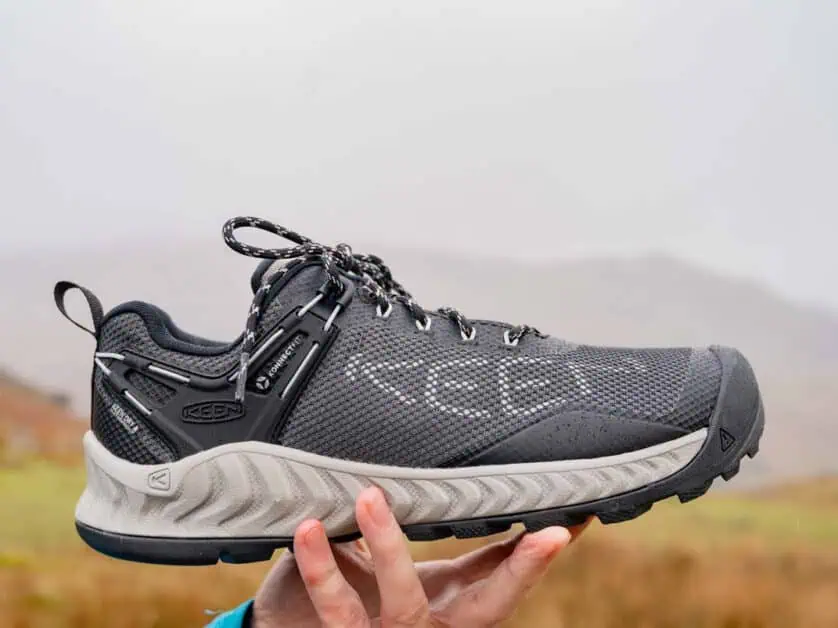




There is a lot to consider when it comes to finding the best waterproof hiking shoes for your needs. Whether robust ankle support is a given for you may depend on the type of hiking you intend to do (or want to do later down the line). The breathability will very much depend on what kind of temperatures you find yourself and the level of waterproofing itself will be determined by what kind of terrain you’ll encounter. There’s also price – as you can see, waterproof hiking shoes vary in price a lot! So, we’ve broken down what you need to consider when choosing the right waterproof trail shoes for you.
Type and Style
When looking at the type and style, there are a variety of different things to consider. You’ll generally see walking and hiking shoes offered as a mid or low hiking shoe (more like a trainer) a mid (hybrid between a boot and a shoe) and a more traditional boot style. You’ll also find trail runners which are a hybrid between a hiking shoe and what you’d usually use for running except they generally have a slightly softer sole that is better suited to the trail rather than pavement. Deciding which variant is right for you will really depend on what you plan to do on the trail. For example, if you know you’re going to be trying to cover terrain that is very high altitude, alpine etc, you might be better served with a more traditional hiking boot, but if you’re looking for something more all-round and for generalized hiking, waterproof hiking shoes will be better served for you.
If you are someone that doesn’t always feel the steadiest on the trail, you may be better opting for a mid or full shoe with better support. If you are quite sure of your footing, or are into ultralight backpacking or fastpacking, then good waterproof hiking shoes with strong support in the heel, such as the Danner 2650 will suit you well – they’re some of most comfortable waterproof walking shoes you’ll find.
Price
As you’ll see, the prices of hiking shoes vary a lot across the board. Where you’re seeing shoes offering high end and cutting-edge design with state of the art materials and well known brands like Gore-Tex, you can expect to pay more. It’s about looking at, firstly, the budget you have to spend, but secondly, what is going to get you the best return on investment. If you’re going to be hiking a lot and know that a pair of comfortable waterproof shoes will fit the bill for most of what you’ll be doing, opting for some of the more high-end models in our roundup would likely be best suited for you. If you know you’re likely to need something different for summer hiking than you will in winter, even as a waterproof version, then it may be better going for something in the middle. That said, they do not have to cost the earth and there are numerous shoes in this line up that offer great technical spec at a more reasonable price point. Such as the Adidas Terrex AX4, The North Face Hedgehog Fastpack, The Merrell Moab 3 and the Regatta Vendeavour Pro.
Traction
If you’ve been thinking ‘should I get waterproof hiking shoes as an upgrade from trainers?’ when we think about traction, this is where you’re going to see the biggest improvement and where comfortable, water-resistant shoes come into their own. More casual footwear can be great, but it can never really take on shoes that are intended for hiking when it comes to harder terrain, loose gravel and slippery surfaces. On a lot of the hiking shoes out there, you’ll see that Vibram is the go-to name – they’re well known for their mid to deep thread which provides secure grip on the trail. You’ll also see relative newcomers on the outdoor footwear scene from tyre brands like Continental, who partner with Adidas Terrex on their line. There are also numerous brands who handle their soles and traction in house – for example, Salomon. They work with their in house ‘Contagrip’ which, in our tests is just as robust as you’d likely find with Vibram or Continental. If you’re looking at a hiking shoe from a well-known, reputable brand, you can be sure that the traction you’ll be getting from the soles of your shoes will stand up to heavy usage.
Breathability
If you’re looking for the best breathable hiking shoes, and you also want them to be waterproof, you will always need to make some concessions. There is, at present, no way to create a fully breathable pair of hiking shoes that is waterproof. The reason for this is because a fully waterproof material and membrane is never going to wick moisture away from the skin (or socks) as well as a shoe that is made pretty much entirely of mesh. However, some of the more advanced, GTX hiking shoes (Gore-Tex) out there do a good job of getting the balance right. Looking at the absolute breathability and the absolute waterproofing balance on the shoes you decide to buy should be determined by where you will use your hiking shoes the most. If you are going to be wearing them mostly in the desert, where it is unlikely to rain very much for example, then going for more breathable options will be the best call. If you know you’re likely to experience all weathers and types of condition, or if this may change quite quickly, opting for something that get the balance will be better.
Ankle Support
The market has moved on a lot, and many hikers now favor a hiking shoe over a more traditional, heavy weight boot. This gives you a more flexible, agile feel on the trail. Provided you feel relatively sure on your feet, these may well be the only waterproof hiking sneakers you need. This is one of the things that makes a pair of fit for purpose hiking shoes sit out against just having a pair of runners or tennis shoes. In terms of ankle support, there are various models that, even though they outrightly don’t have a lot of ankle support, actually offer something quite special. For example, the Danner Trail 2650’s have a rubberised plate on the outer heel of the shoe which keeps the foot in place making you feel more secure.
Arch Support
Most hiking shoes out on the market today will be offered with a gentle to slightly raised arch support. Those that come with a slightly different arch support will likely offer a more padded insole which can help improve shoch from the ground. Generally, most people will be ok with the arch support offered with most hiking shoes on the market, but if you find that you could benefit from a little bit of extra support, you may find that replacing the manufacturer insoles with insoles bought specifically from the pharmacy or online may improve your experience. You will generally find that the best waterproof hiking shoes will be more comfortable when worn on the trail than tennis shoes or similar, more for their sole and overall comfort than the arch support offered by the insoles.
Fit
As a general rule, most of the hiking shoes we’ve reviewed are good for those with average width feet and those with slightly wider feet, with only a couple being trickier and suitable for narrower feet. When looking at fit, it’s a good idea to know how your feet feel in shoes before you buy. Do you generally like a toe post that is a little wider, or do you prefer it when the toe post narrows in? This will help you determine which will be the best for you. That said, you should always think in terms of your socks, and what kind of terrains you’ll be using your lightweight waterproof shoes in. If you find that they’re a little too snug, you should return them immediately and go for a larger size – they likely will never wear in on the trail and being decisive at the start can save you a lot of money on non-returnable shoes once worn. If they’re running a little big, then if it’s only slightly, try insoles. We also wrote a guide on how lacing your shoes for your particular foot shape can make all the difference that you can read here.
Onto the question of men’s and women’s specific shoes. Is there really a difference? One of the main reasons we’ve divided the shoes up above like we have is because most manufacturers are still offering a specific shoe for different genders. Most of them are available as unisex options too. Upon testing, we genuinely don’t see that much of a difference between the two, except the size ranges – you’ll generally find that men’s sizes are offered much larger and sometimes with a wider fit. If there are further differences, then they really are marginal. So, if you’re someone who needs a wider fit or a larger option, go with what works. We’d be happy to see the outdoors industry moving towards more unisex styles without the need for so much variance!
Materials
There are a whole range of materials used when it comes to good waterproof walking shoes. These vary a lot depending on how much you are prepared to spend and range from high end tech materials to more entry level or basic designs. You’ll typically find mesh sections fitted to waterproof hiking shoes and this helps tremendously with breathability – something that used to be a problem before the advent of more modern technology. Traditionally, most hiking shoes were made from either leather or suede (or a combination) but many brands are now opting in favor of synthetic materials. Not only is this great because you can pack in some mighty technical gains, but you can also remove the need for animal based materials too (though if you’re looking for a vegan hiking shoe, be sure to check out the manufacturers specs to see what glue is used). Generally, we’ve found no real difference in our testing between synthetic materials and animal based materials. Of course, leather is well known, but it isn’t the be all and end all now.
When it comes to waterproofing, you’ll likely find Gore-Tex or a similar type technology used on the top waterproof shoes. This allows the manufacturer to create a breathable fabric membrane within their shoes. Whatever materials are used can have a significant impact on weight too, with synthetic options generally being the lightest.
Appearance
Appearance is such a personal thing when it comes to light waterproof hiking shoes. What you think is stunning, someone else might think is overkill. What you might see as boring, someone else might see as practical and hard wearing. Generally, hiking shoes have come a long way in design and now, some manufacturers, such as Adidas Terrex and Danner, amongst others are offering options for great lightweight hiking shoes that get the balance between technical specs and being desirable to look at. It is important to keep in mind that their looks may not last forever though – whilst it is possible to clean your hiking shoes (and you should if you want to have them last as long as possible) you may find that some areas can’t be cleaned as easily and do not look so good after a lot of wear and tear. Generally, the more high spec the materials used, the more likely you are to have a hiking shoe that stays looking as good as it can for as long as it can as this will help to ward off any rips or scrapes that can tarnish it’s look.
Durability
The best walking and hiking shoes use strong, well tested materials which have a proven track record of standing the test of time. This only continues to improve – and whilst a hiking shoe may seem a little flimsy on first look, you’ll realize very quickly that it’s incredibly durable. However, durability is of course very subjective and it’s very difficult to plan for anything and everything that may happen to it in its lifespan. You can’t really predict what might happen down the line! That said, we’ve made sure that all of the hiking shoes we’ve recommended have been rigorously tested for durability amongst harsh conditions. If you know you’re going to be hiking in very demanding terrain, opting for a model with more robust material and less mesh with a heavier thread sole may be a good option for you. Whereas if you know your shoes are going to get less of a beating, walking/hiking shoes with more mesh and a lighter feel may be more suitable with no concerns for durability.
Weight
The weight of your waterproof walking sneakers is by far one of the most important considerations, and you should be thinking about how you intend to use them. In times gone by, you’d be right in thinking that waterproof hiking shoes were much heavier, but now, thanks to improvements in technologies and the competition many outdoor brands have against each other, you’re seeing these offered at absolutely astounding weights. The weight you carry on your feet makes a big difference to the overall fatigue you’ll feel – this has been scientifically proven (the weight on your feet is x5). All of the shoes we’ve recommended above are light, but some more so than others, and this is generally down to the amount of mesh used in the upper for breathability. Mesh is generally a lighter material. Even with modern developments aside, the heavier shoes out there will always be the one with more substantial waterproofing, or at least for now. So, take note of where you plan to hike and we’d advise getting the lightest shoes you can get away with for purpose.
Insoles
If you have never had problems with your feet, there’s a fairly strong chance that the insoles that come with your waterproof walking shoes are going to be more than fit for purpose. In all our testing, the insoles offered by most brands really don’t differ that much. Whilst they may make claims about them, there really isn’t a lot in it. We genuinely feel that what makes the most difference in terms of comfort is the sole and upper of the shoe. However, if you find your hiking shoes are running just a tiny bit too big, a good pair of insoles can make a big difference in the snug feeling of the fit. Likewise, it’s worth knowing that if you need specialist support and have been recommended to wear specific insoles that pretty much any of the shoes, we’ve recommended can switch up the insoles. Of course, insoles do wear down over time, so if you’ve had your shoes for a couple of years and they feel less comfortable than they once did, it’s worth changing the insoles to give them a new lease of life.
Break-in Period
One of our most important testing criteria was comfort, so all the recommendations above are for products that offer some of the most comfortable waterproof hiking shoes you’ll find. However great your new hiking shoes feel straight out of the box, you should never just wear them straight out on the trail. Even more so if that trail is going to be a long distance one. You need to have them broken in before you attempt anything longer than a mile or two and be confident that there are no rubbing points or areas of concern. This can easily be the difference between enjoying, and even completing, your hike or not. We’d recommend that you try them out locally for a while first and wear them as much as possible to get a real feel for how they are. Make sure that any sore, rubbing spots have been rectified first.
Lacing System
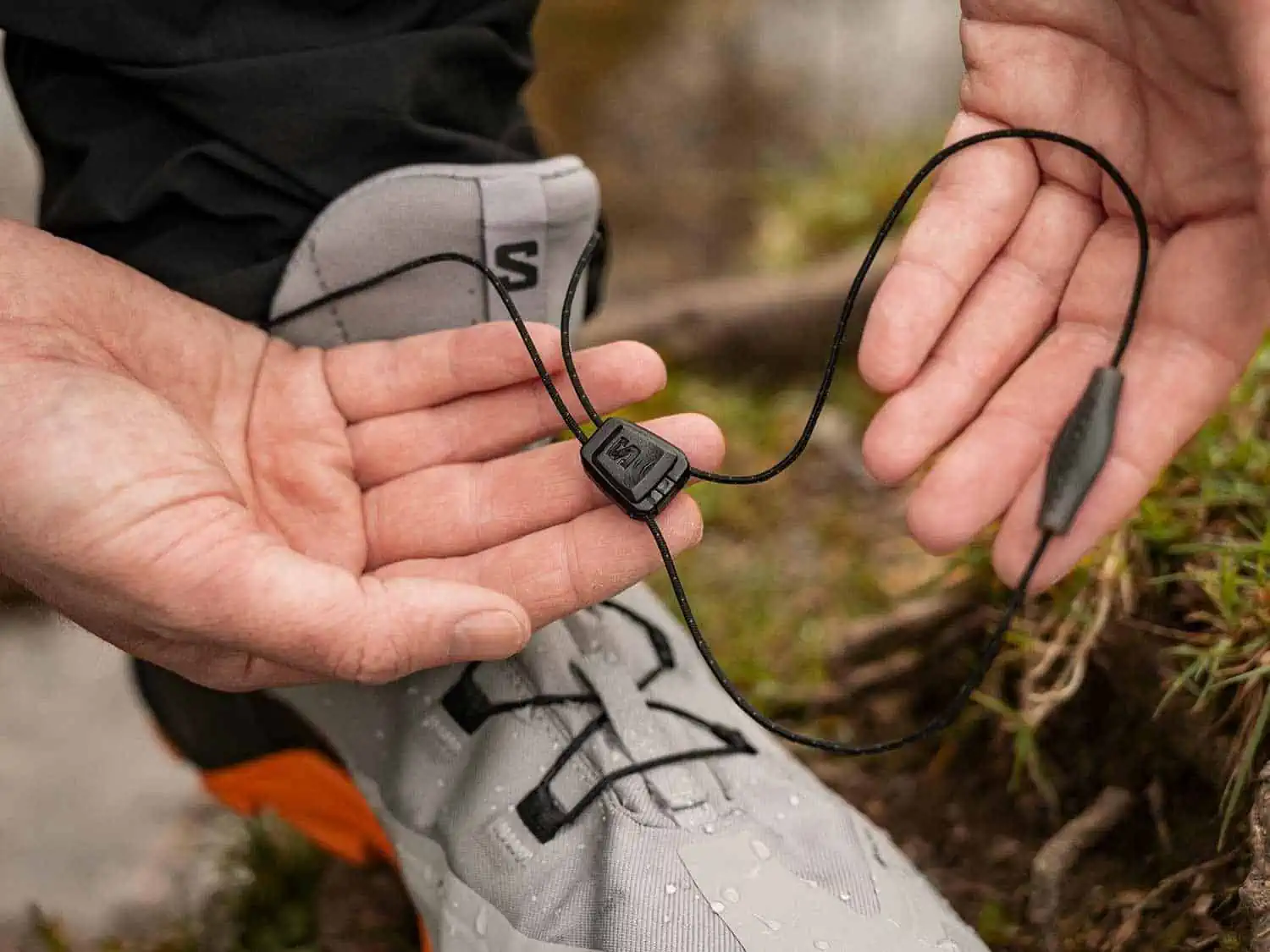
Most of the waterproof walking shoes that we’ve recommended come with a similar, or standard lacing system that you’ll be very well used to. One of the only exceptions to this is the Salomon Cross Hike 2 Mid Gore-Tex that come with a speed lacing system. Some shoes come with a multizone approach to allow you better definition and fit on certain areas of the foot, such as the Regatta Vendeavour Pro, the Muck Boot Apex Lace Up and the La Sportiva Ultra Raptor II Mid GTX Hiking Boots to name a few. However, there is a lot you can do yourself to fine tune the feeling a fit of your shoes by looking at the lacing system. We wrote a whole article on how you can do this – looking at some of the most common foot concerns and shapes and the lacing patterns you can do to achieve a bespoke fit. Read the guide to relacing your shoes here.
Toe Protection
If you find that you bump your toes quite a bit on rocks and branches on the trail, then you should be thinking about the level of toe protection that you get with the waterproof walking shoes you decide to buy. It maybe goes without saying, but as with the advent of more nimble and lightweight hiking shoes has come a decrease in ankle protection, so has there been a decline in toe protection. This is likely because of the weight reduction that can be achieved by removing heavier materials that were often used for toe protection in the past. If this is a point of concern, you want to look for shoes that have a better rubberized toe and less focused on mesh around the toe. Something like the Danner Trail 2650 would work really well here, as would the Black Diamond Mission Low Waterproof Approach Shoes.
Hiking Shoes v Hiking Boots
Whether you go for a hiking shoe or a hiking boot is going to be a personal decision. Some people still prefer the added ankle support of a hiking boot, whereas others prefer the lightweight feel and quick movement you get from light waterproof shoes. We’re still divided here, based on personal preference and how we like to feel on the trail, as to which is the best. If you know you are likely to roll your ankle more, then opting for boots may be the best option for you. If you know that you’re a lot surer footed and want the lightweight feel you can get from a shoe, then go for that. We see the difference between hiking boots and hiking shoes becoming less and less obvious with more hybrid models than ever.